
Why Local Countertop Fabricators Beat Big-Box Stores for Countertops in Reading & Wyomissing, PA
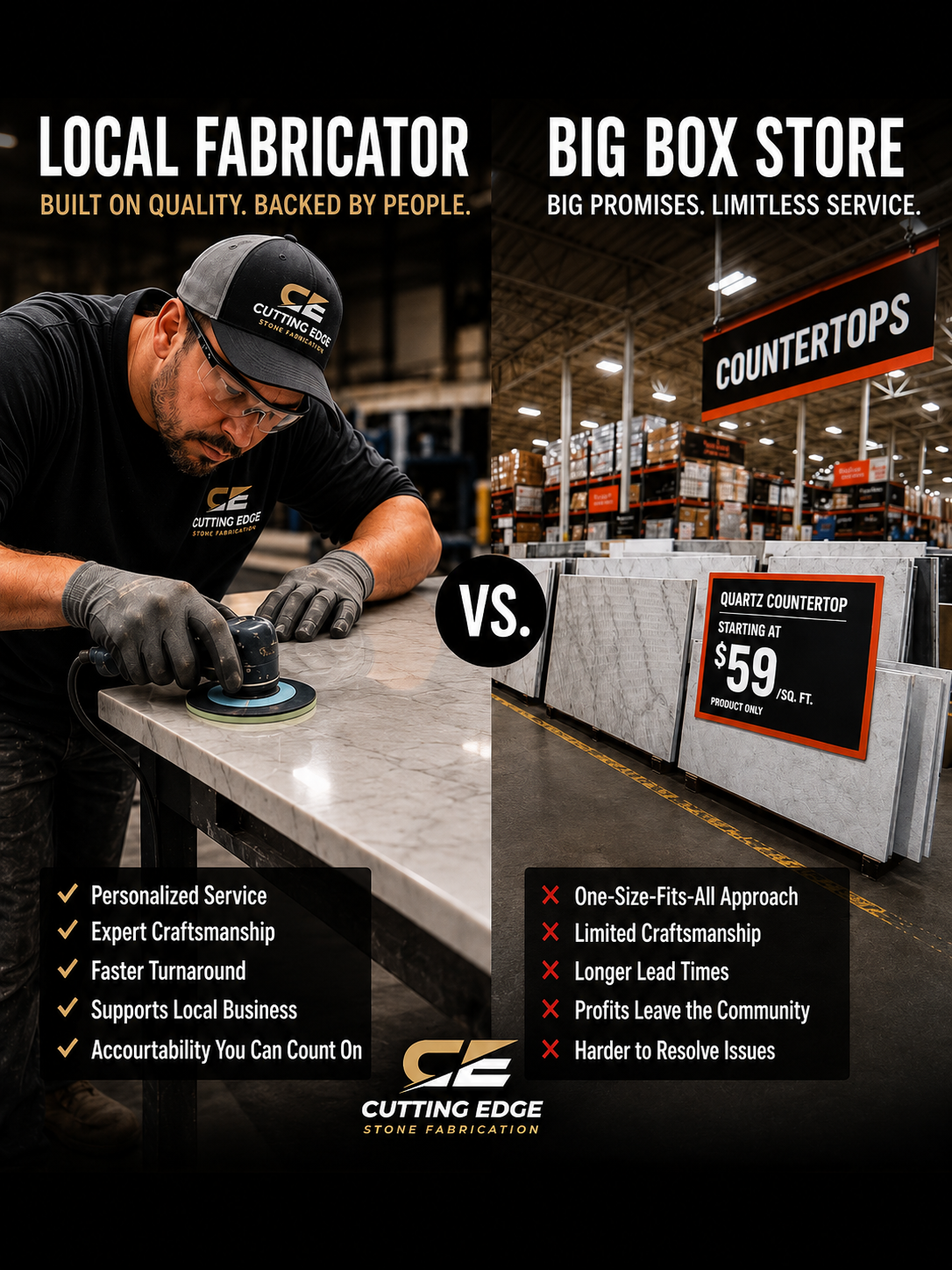
When homeowners in Reading, Wyomissing, and throughout Berks County start shopping for new kitchen countertops, one of the first decisions is where to buy. Should you walk into a national big-box store and order countertops through their kitchen department, or should you work directly with a local countertop fabricator who measures, fabricates, and installs stone every day?
At first glance, a big-box store can feel simple. The store is familiar, there are displays, financing may be available, and the process looks organized. Those are real advantages. This is not written to say that every big-box countertop project is bad. The better, more honest point is this: when you want a custom countertop job done with strong communication, careful material guidance, thoughtful seam planning, and local accountability, working directly with a professional local fabricator usually gives you a better experience.
Countertops are not a small accessory. They are measured to fit your exact cabinets, cut from heavy slabs, fabricated around sinks and cooktops, carried into your home by trained installers, leveled on cabinets that must be ready, and finished with seams, edge profiles, overhangs, and support details that affect the final look. That is why who you work with matters.
Countertops are not a small accessory. They are measured to fit your exact cabinets, cut from heavy slabs, fabricated around sinks and cooktops, carried into your home by trained installers, leveled on cabinets that must be ready, and finished with seams, edge profiles, overhangs, and support details that affect the final look. That is why who you work with matters.
The Honest Comparison: Big-Box Convenience vs. Direct Fabricator Control
A big-box store can be convenient because everything starts in one familiar place. You may be able to browse a limited selection, speak with a kitchen associate, use a store credit card, and begin a project without searching for a local specialty shop. For some very basic jobs, that convenience may be enough.
But countertop projects are different from buying a light fixture, a faucet, or a box of flooring. A countertop is custom-made. A drawing or online estimate is only the beginning. The final project depends on the field template, the actual slab or quartz selection, how seams are planned, how cutouts are handled, how overhangs are supported, and how well the installers solve details inside the home.
Official big-box countertop guides confirm that these projects rely on templating, measurement verification, fabricator or installer involvement, change orders when the field conditions differ, and preparation requirements like installed cabinets, sink and cooktop information, clear work areas, and a homeowner present to approve details. In other words, the critical work is still done by countertop professionals. The difference is how directly you communicate with those professionals.
When you work directly with a local countertop fabricator, you are closer to the people who understand the material, the seams, the fabrication, and the installation. That direct line can make a major difference, especially when your kitchen has an island, a natural stone slab with movement, a farmhouse sink, an unusual cabinet layout, a full-height backsplash, or a tight schedule.
What a Big-Box Store Actually Does in a Countertop Project
Big-box stores typically act as a sales and project channel. They help you start the order, select a material from the available program, enter your measurements or schedule a measure, and process payment or financing. Then the project moves into measurement, template, fabrication, change order, and installation. The official materials from major retailers make it clear that countertop projects are not simply pulled off a shelf. They involve a local installer or countertop professional who visits the home, verifies the measurements, creates a template, and works from the field conditions.
This matters because many homeowners think the big-box store itself is fabricating the countertop. In most cases, the store is not the stone shop. The store is the front-end selling point, and the actual measurement, fabrication coordination, and installation are performed by installers, fabricators, or independent professionals connected to the store's program. That is not automatically negative. It simply means there can be more handoffs between the homeowner, the store associate, the project center, the fabricator, and the installation crew.
Those handoffs are where confusion can happen. A homeowner may explain a detail to the store. The store may enter it into paperwork. A template professional may notice a field condition that changes the quote. A change order may be issued. The fabricator may make decisions based on material, slab size, seam requirements, or handling limitations. The installer may discover jobsite details on installation day. The more people and systems between the homeowner and the actual stone team, the more important communication becomes
With a direct local fabricator, the process can be simpler: you bring or send a sketch, discuss materials, visit the showroom or slab yard, choose the stone, approve the quote, schedule the template, review key details, then the same local company coordinates fabrication and installation. You still need proper cabinets, fixtures, and preparation, but the conversation is more direct.
Why Local Fabricators Usually Win for Custom Countertops
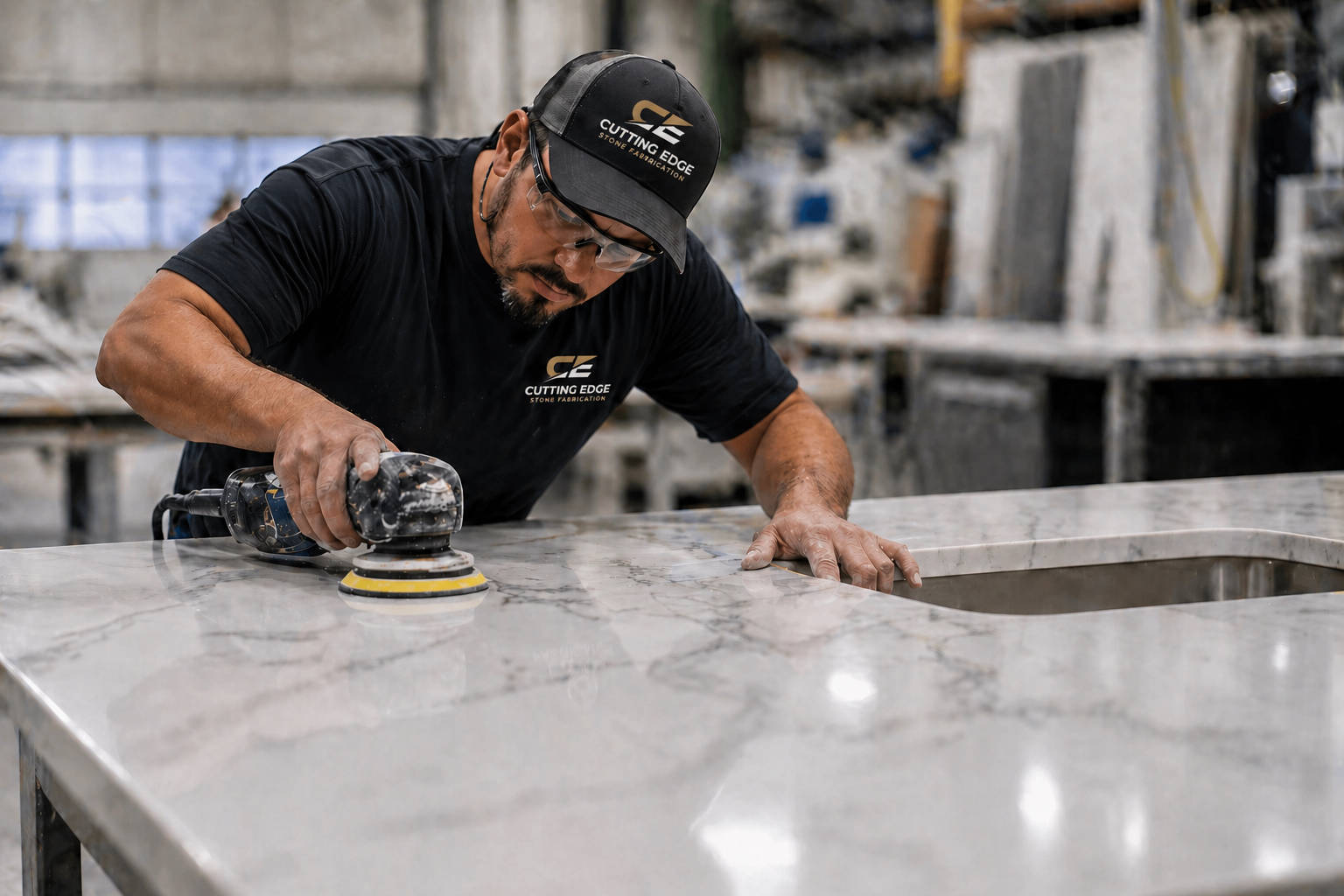
The strongest argument for a local fabricator is not just price. It is control. Countertops have too many details to treat them like a one-click product. Material selection, slab layout, seam location, cutouts, overhangs, backsplashes, edge profiles, and installation conditions all need professional attention. A local fabricator gives you a better chance to understand those choices before the stone is cut.
Here are the biggest reasons homeowners in Reading and Wyomissing should strongly consider going direct.
1. You Get Direct Communication With the People Who Understand Stone
Countertops are technical. A kitchen associate may know the store's ordering system, but a fabricator understands the material itself. That is a different level of guidance. A fabricator can look at a layout and immediately think about seams, slab size, grain direction, appliance cutouts, sink reveal, overhang support, cabinet readiness, backsplash height, and how installers will safely carry the pieces into the house.
Direct communication helps prevent small misunderstandings from becoming expensive problems. For example, a homeowner may say they want a large island with no seam. A fabricator can explain whether the selected material, slab size, access path, island size, and handling conditions make that realistic. A homeowner may want a long overhang for seating. A fabricator can explain when support brackets are needed. A homeowner may want the sink centered under a window. A fabricator can confirm whether the cabinet, sink, faucet, and window trim all work together.
With a local fabricator, those conversations happen early. You can ask real questions and get real answers from people who handle stone every day. That is much better than making a decision from a small sample or a generic price sheet without understanding how the final countertop will be built.
2. You Can See Materials in Person Instead of Relying Only on Small Samples
One of the biggest differences between a direct fabricator and a big-box counter program is the shopping experience. A small sample can help you understand a general color, but it does not show the full slab. Natural stone especially can change dramatically from one end of the slab to the other. Granite, quartzite, marble, and many exotic stones have movement, veining, mineral deposits, color shifts, and natural character that cannot be judged from a small chip.
Even engineered quartz can vary in how it feels once you see a larger piece. Some quartz patterns look soft and subtle on a sample but much busier across a whole island. Other quartz designs may look plain on a sample but beautiful when used across a full perimeter. Lighting also changes everything. A countertop that looks bright in a showroom display may look warmer, cooler, darker, or busier inside your actual kitchen
A local showroom and slab yard give homeowners a better way to make a confident choice. Instead of guessing, you can stand in front of real slabs, compare materials, look at movement, take cabinet and flooring samples with you, and decide what actually fits your home. For high-end natural stone, this is not a luxury; it is one of the most important steps in the process.
Cutting Edge tip: If you are choosing granite, quartzite, marble, or a bold veined quartz, try to see a larger piece or full slab before final approval. Small samples are useful, but they should not be the only thing guiding a major kitchen decision.
3. Slab Selection Matters More Than Most Homeowners Realize
For natural stone, you are not just choosing a material name. You are choosing the actual piece of stone that will become your countertop. Two slabs with the same name can look noticeably different. One Taj Mahal quartzite slab may have soft cream movement, while another may have stronger gold or gray veining. One granite bundle may be consistent, while another may have more movement, darker mineral pockets, or areas the fabricator should avoid.
A strong fabricator looks at the slab with the finished kitchen in mind. Where should the prettiest movement land? Should the island be the showpiece? Are there areas of the slab that should be hidden in a less visible section? Will the veins line up at a seam? Is there a fissure, fill, or natural inclusion that should be avoided near a sink or cooktop cutout? These are the details that make stone fabrication a craft, not just a transaction.
When you go direct, you can have that conversation with the company responsible for cutting the stone. That is extremely valuable. A countertop is not just a flat surface; it is a layout puzzle. The best fabricators think through the slab before cutting so the final kitchen looks intentional.
4. Seam Planning Is Too Important to Leave as an Afterthought
Most countertop installations require at least one seam. That is normal. The goal is not always to eliminate every seam; the goal is to place seams in the smartest locations based on material size, color, stability, cabinet layout, visibility, support, and safe handling. A seam in the wrong place can become a daily frustration. A seam in the right place can blend into the project and barely draw attention.
Seam planning is one of the biggest advantages of working directly with a fabricator. A fabricator can explain why one seam location is better than another. They can look at the kitchen layout, slab dimensions, sink cutouts, cooktop cutouts, dishwasher openings, overhangs, doorways, stairways, and installation access. They can also explain the difference between a seam that is technically possible and a seam location that is visually better.
The official big-box project literature also recognizes seam discussion as part of the template appointment. That confirms how important the topic is. The issue is not whether seams matter; everyone in the industry knows they matter. The advantage of a local fabricator is that you can often discuss seams sooner, more directly, and with the people who are actually responsible for the finished work.
5. Local Fabricators Are Better Equipped to Handle Real-World Jobsite Conditions
Not every kitchen is brand new, level, square, open, and easy to access. Many homes in Reading, Wyomissing, West Reading, Shillington, Sinking Spring, Exeter, Muhlenberg, and surrounding Berks County areas have older framing, settled floors, remodeled cabinets, tight doorways, narrow stairs, uneven walls, unusual trim, or layouts that have been changed over time.
A countertop has to fit the home as it exists, not as it looks on paper. Cabinets must be installed and secured. Apron sinks often need to be set before template. Cooktop and faucet information must be available. Overhangs may need support. Walls may be out of square. Appliances may affect edges and clearances. The installers need a safe path to carry heavy stone into the space. These details are normal in the countertop world, but they require experience.
A local fabricator that works in the area every day is used to local housing styles and construction conditions. They know the types of remodels homeowners are doing. They know how to coordinate with cabinet shops, builders, designers, plumbers, electricians, and kitchen manufacturers. That local familiarity can make the process smoother.
6. You Usually Get a Clearer Path From Sketch to Quote
Many homeowners are not ready for a perfect, final measurement when they first reach out. They may have a rough sketch, a cabinet plan, a photo, or a simple drawing with approximate sizes. A good local fabricator can use that information to start a ballpark quote, explain what is missing, and guide the homeowner toward the next step.
This is important because homeowners often want to understand budget before they invest too much time. A direct fabricator can usually look at a sketch and tell you what material category fits your goals, whether the island size may require a seam or special slab, whether the sink/cooktop details matter, and whether you should visit the showroom before the quote is finalized.
A big-box program may also provide estimates, but the process can be more tied to forms, online measurements, store systems, or scheduled project steps. Direct local quoting can feel more personal and flexible, especially when the customer is still deciding between granite, quartz, quartzite, marble, or porcelain.
7. You Can Compare Materials Based on Lifestyle, Not Just Price
Countertop buyers often start with price, but price should not be the only factor. The right surface depends on lifestyle. A busy family kitchen may need low maintenance. A serious cook may care about heat resistance and durability. A high-end remodel may prioritize natural movement and a statement island. A rental or flip may need a clean, durable, budget-conscious option. A bathroom vanity may be a great place to use a smaller in-stock piece.
A fabricator can help connect material choice to how the space will actually be used. Quartz is popular because it is consistent and low maintenance. Granite remains a strong choice for natural durability and uniqueness. Quartzite is beautiful and high-end but should be selected carefully and maintained properly. Marble can be stunning, but homeowners need to understand etching and patina. Porcelain can be modern and durable, but it requires knowledgeable fabrication.
A local fabricator is not just selling a brand name. They are helping you choose a surface that makes sense for your kitchen, your budget, your maintenance expectations, and your design style.
8. Direct Accountability Is Easier to Understand
One of the most common frustrations in any home improvement project is not knowing who is responsible when a question comes up. Is it the salesperson? The store? The measuring company? The fabricator? The installer? The warranty department? The manufacturer? The subcontractor? The more layers involved, the more confusing accountability can feel.
A direct local fabricator simplifies that chain. The customer knows who quoted the job, who templated it, who fabricated it, who installed it, and who to call after the installation. That does not mean every project will be perfect or that no challenges will ever happen. It means there is a clearer path for communication and service.
This matters a lot after installation. If you have a question about a seam, sink reveal, polish, chip, support, backsplash, or care, you do not want to get bounced around. You want to call the company that knows your job and can look into it directly.
9. A Local Fabricator Can Better Support Contractors, Builders, and Designers
Many countertop projects are part of a larger kitchen remodel. That means the countertop company must coordinate with cabinet installers, kitchen designers, builders, remodelers, plumbers, electricians, and appliance suppliers. Communication between trades is important. Cabinets need to be ready before template. Appliances and templates may need to be available. Plumbing and electrical connections may need to be disconnected and reconnected by the proper trades. Tile backsplashes may need to wait until countertops are installed.
A local fabricator is used to working directly with other local professionals. That is a major advantage for builders and designers who need dependable communication. If a cabinet company sends a plan, a fabricator can price from it. If a contractor needs to know when cabinets must be installed, the fabricator can explain the sequence. If a designer wants a certain vein direction on an island, the fabricator can help evaluate the slab.
This direct trade-to-trade communication is especially useful when the project has deadlines, multiple rooms, a large island, waterfall panels, full-height backsplash, mitered edges, outdoor areas, or specialty materials.
10. Local Fabricators Understand the Value of Reputation
A local countertop company lives and dies by local reputation. When a homeowner in Wyomissing has a great installation, they tell neighbors, designers, contractors, realtors, and friends. When a project is mishandled, word spreads quickly too. That local pressure creates accountability.
A big-box store has national brand recognition. A local fabricator has a local name to protect. For homeowners, that can be a major benefit. You are not just another order in a national system. You are a local customer, often close enough to visit the showroom, ask questions, and see the people involved.
This is also why local reviews matter. Before hiring anyone, homeowners should look at reviews, photos, response quality, service history, and whether the company shows real local work. The lowest price is not always the best value. A countertop that is measured, fabricated, and installed correctly is worth more than a cheap quote that creates stress later.
Where Big-Box Stores Can Still Make Sense
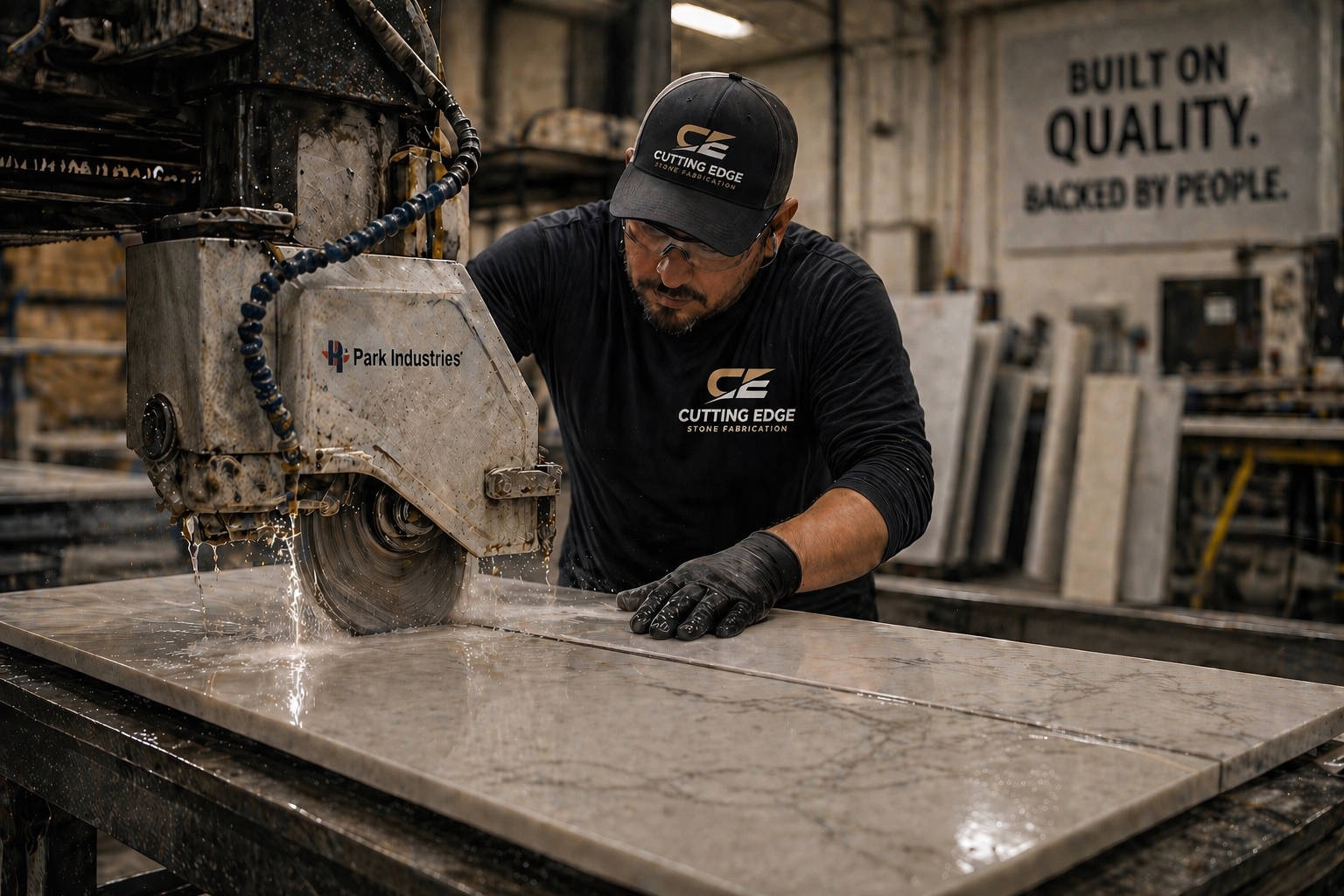
A fair comparison should also explain when a big-box option may be acceptable. For some homeowners, a large retailer may make sense if the project is very simple, the material selection is straightforward, financing is the top priority, the customer is comfortable with the store's process, and the homeowner does not need much customization or direct slab review.
For example, if someone wants a basic quartz color from a standard program for a small rental kitchen, and they are not particular about advanced slab layout, a big-box route may work. If the customer strongly values store financing or a national project portal, that may also matter. Some big-box programs use qualified installers and provide labor warranties. Those are real benefits.
However, the more custom the project becomes, the stronger the case for working directly with a local fabricator. Natural stone, large islands, bold veining, quartzite, marble, full-height backsplashes, unusual layouts, exact seam concerns, local schedule coordination, and high-end design expectations all benefit from direct professional involvement.
When You Should Definitely Consider Going Direct to a Local Fabricator
You should strongly consider a direct local fabricator when your project has any of the following details:
– A large kitchen island where slab size, seam placement, and vein direction matter.
– Natural stone like granite, quartzite, marble, or exotic slabs with strong movement.
– A high-end kitchen where the countertop is one of the main design features.
– A farmhouse or apron-front sink that needs correct template coordination.
– A cooktop, downdraft, or specialty appliance that requires accurate cutout information.
– A waterfall edge, full-height backsplash, mitered edge, or other custom detail.
– An older home with uneven walls, settled floors, tight access, or special field conditions.
– A contractor, designer, cabinet shop, or builder involved in the project.
– A homeowner who wants to see real slabs in person before committing.
– A customer who values direct local communication and after-installation service.
The Preparation Rules Are the Same Either Way
One important thing to understand is that going direct to a local fabricator does not eliminate the rules of a successful countertop project. Countertops still require proper preparation. Cabinets need to be fully installed, secured, level, and ready before template. Sinks, faucets, cooktops, and accessories need to be selected and available as needed. The work area needs to be clear. Existing countertops may need to be removed depending on the project. A decision-maker should be available to approve details. Plumbing, gas, and electrical work must be handled by the appropriate trades.
These requirements are not a sales tactic. They exist because countertops are built from exact field measurements. Once a template is created, moving cabinets, changing sinks, changing appliances, changing faucet locations, or changing the layout can affect the entire job. The more prepared the kitchen is, the smoother the project will go.
A good fabricator will explain these requirements clearly so the homeowner knows what to expect. That clarity is one of the reasons direct communication matters.
Questions to Ask Before Buying Countertops Anywhere
Whether you are considering a big-box store, a local fabricator, a cabinet company, a builder's referral, or another countertop shop, ask the right questions before signing. Good questions protect your project and help you compare quotes fairly.
Ask these questions about measurement and template:
– Who comes to the house to measure and create the template?
– Are cabinets required to be fully installed before template?
– What items need to be on site for template, such as sink, faucet, cooktop, soap dispenser, or appliance templates?
– What happens if the field measurements differ from the original estimate?
– Can I discuss seam placement before the stone is cut?
Ask these questions about fabrication:
– Who fabricates the countertops?
– Can I visit the showroom or slab yard?
– Can I see the full slab before approval?
– How are seams, vein direction, and visible areas planned?
– What edge profiles are included, and what costs extra?
Ask these questions about installation:
– Who installs the countertops: employees, subcontractors, or independent installers?
– Are installers insured and experienced with this material?
– Who handles sink mounting?
– Who reconnects plumbing, gas, and electric if needed?
– What should be cleared before installation day
Ask these questions about quote and warranty:
– Is the quote itemized enough to understand what is included?
– What could change after template?
– Is there a written agreement?
– What warranty applies to material and labor?
– Who do I call if I have a question after installation?
How to Compare Quotes Without Getting Misled
Countertop quotes are not always apples to apples. One quote may include templating, fabrication, install, standard edge, sink cutout, sink mounting, tear-out, and backsplash. Another quote may separate those items or add them later. One quote may be based on a basic quartz color. Another may be based on a premium quartzite. One quote may include more seams. Another may require more slabs or extra labor.
That is why homeowners should not choose based on the bottom-line number alone. A low quote can become more expensive if key items are missing, if material assumptions are different, or if change orders appear later. A higher quote may actually be better value if it includes stronger service, better material guidance, more careful layout, and a local team that stands behind the job.
When comparing quotes, look at the material name, thickness, edge profile, sink cutouts, cooktop cutouts, backsplash, tear-out, disposal of old countertops, seams, slab count, template, installation, taxes, trip charges, and any exclusions. Also ask how changes after template are handled. A good company should be able to explain the quote clearly.
Why This Matters More in Reading, Wyomissing, and Berks County
Local market knowledge matters. Homes in this area vary widely. Some kitchens are in older Reading homes with tighter access and existing walls that are not perfectly square. Some are in Wyomissing homes with larger islands, custom cabinets, and high-end finishes. Some are remodels in West Reading, Sinking Spring, Exeter, Fleetwood, Muhlenberg, Shillington, Mohnton, Wernersville, and surrounding towns. Some are builder projects, some are cabinet-shop projects, and some are homeowner-led renovations.
A local fabricator understands that variety. They are not just processing a generic countertop order. They are helping local customers solve real kitchen problems. They can coordinate with local cabinet companies, remodelers, contractors, designers, and homeowners who may need a quote based on a sketch before cabinets are even fully installed.
For Cutting Edge Stone Fabrication, the local advantage is also the ability to show customers materials, talk through options, and guide them based on the type of project. A homeowner doing a luxury kitchen may need a very different conversation than someone replacing a small vanity top. A contractor building multiple kitchens may need a reliable estimating and scheduling process. A designer may need help matching stone movement to a design board. Direct local relationships make all of that easier.
The Quality Difference Is Often in the Details You Do Not See at First
When a countertop installation looks beautiful, it can feel effortless. But a lot of decisions happen before the final piece is set in place. The fabricator has to review the layout, confirm measurements, plan seams, consider slab movement, cut openings accurately, polish edges, prepare sink details, load the pieces safely, carry them into the home, set them properly, join seams, level the tops, and clean the work area.
A homeowner may only see the finished surface, but the finished surface reflects all of those hidden decisions. That is why an experienced fabricator matters. Stone is heavy. Natural materials have character. Quartz and porcelain have manufacturing requirements. Cutouts create weak areas if they are planned poorly. Large pieces must be handled safely. Seams must be placed with care. Overhangs must be supported. Backsplashes must coordinate with walls. The small details are what separate a clean, professional job from an average one.
A big-box store can sell countertops, but a fabricator lives inside these details every day. That is why going direct often creates a better customer experience.
A Balanced Recommendation for Homeowners
If you are at the very beginning and simply want to understand rough options, there is nothing wrong with walking through a big-box store. It can help you see basic colors, understand general categories, and start thinking about your budget. But before you make the final decision, it is smart to visit a local countertop fabricator and compare the experience.
Bring your sketch, cabinet plan, photos, or rough measurements. Bring cabinet door samples, flooring samples, paint colors, or backsplash ideas if you have them. Ask to see quartz, granite, quartzite, marble, and porcelain options. Ask how the quote will be built. Ask how seams are planned. Ask what needs to happen before template. Ask who installs the countertops. Ask who you call if you need help after the job.
The difference will usually become clear quickly. A good local fabricator will not just sell you a countertop. They will educate you, guide you, and help you avoid mistakes.
The Bottom Line: Local Fabrication Gives You More Control
Big-box stores offer convenience, but direct local fabricators offer control. When you work directly with a local stone shop, you have a clearer connection to the experts who understand the material, the slab, the layout, the seams, the template, the fabrication, and the install. For many homeowners, that is the difference between a countertop that simply gets installed and a countertop that truly completes the kitchen.
In Reading, Wyomissing, and Berks County, homeowners have access to local professionals who can help them make better decisions, see materials in person, and understand the full process before the stone is cut. That is especially important for kitchens where the countertop is one of the most visible and valuable parts of the remodel.
Ready to compare your options? Send Cutting Edge Stone Fabrication a sketch, cabinet plan, or measurements for a ballpark quote, or stop into the showroom to review granite, quartz, quartzite, marble, and porcelain options in person.
Side-by-Side: What the Two Buying Paths Feel Like
A big-box countertop path often feels structured because the customer is moving through a retail system. You select a product, provide initial measurements, pay to move the project forward, wait for scheduling, receive an in-home measurement, review changes, then move into fabrication and installation. That structure can be helpful for customers who want a store-managed process, but it can also feel indirect when the homeowner has design questions or wants to understand technical countertop details.
A local fabricator path usually feels more consultative. The customer can start with a conversation, a sketch, a few photos, a cabinet layout, or a showroom visit. Instead of only choosing from a retail program, the homeowner can discuss the entire project with people who know what will happen after template. This creates a different experience because the person helping with the quote is thinking about the final installation, not just the sale.
For a simple perimeter kitchen, both paths may lead to a functional finished top. But as soon as the project has design details, the direct path becomes more valuable. A large island may need a specific slab size. A quartzite selection may need careful viewing. A waterfall panel may need miter planning. A full-height backsplash may need outlet coordination. A farmhouse sink may need cabinet and template timing. A cooktop cutout may require the appliance template. These are the exact details a fabricator is trained to think about.
That is why the best question is not only, 'Where can I buy countertops?' The better question is, 'Who will guide me through the details that determine whether my countertops look right, fit right, and function right for years?' For many Berks County homeowners, the answer is a local countertop fabricator.
What Big-Box Stores Do Well - and Where They Can Fall Short
To keep this accurate, it is important to acknowledge what large retailers can do well. They are convenient, familiar, and easy to find. Many homeowners already shop there for appliances, paint, hardware, fixtures, flooring, and cabinets. They may offer financing options, a national customer-service system, and a simple starting point for people who have never purchased countertops before. Large retailers also have formal processes for installation services, and their own materials describe licensed, insured, or independent installers depending on the program.
Those advantages matter. A homeowner who wants a basic, standard surface and does not care much about direct slab selection may feel comfortable starting there. The issue is that convenience at the front end does not always equal control at the fabrication stage. Countertops are not only about picking a color. The project becomes more technical once field conditions, seams, cutouts, slab movement, support, and installation access enter the conversation.
A big-box store can also be limited by the structure of its program. Material selection may be tied to preferred vendors or program colors. Communication may travel through a store associate, project coordinator, online portal, installer, fabricator, and customer-service department. Changes may require formal change orders. The homeowner may not know the fabricator until later in the process. Again, this does not mean the project will fail. It means the homeowner should understand the tradeoff: convenience versus direct control.
A local fabricator can usually offer a more hands-on approach. The customer can ask design questions, get practical guidance, see real materials, talk about the realities of fabrication, and understand what has to happen before template. For homeowners who care about details, that hands-on approach is often worth more than the convenience of starting inside a national retail store.
Common Problems a Direct Fabricator Helps You Avoid
Many countertop problems begin before installation day. They start with unclear expectations. A customer thinks the sink is included, but the quote did not include the sink. A customer thinks the old countertop removal is included, but it was excluded. A customer thinks the seam will be in one location, but the fabricator places it somewhere else for structural or handling reasons. A customer changes the faucet after template. A cabinet is moved after measurement. A cooktop template is missing. A farmhouse sink is not installed before the template appointment. A large overhang is planned without proper support.
These are not unusual issues. They are common countertop coordination details. The benefit of a direct fabricator is that many of these issues can be discussed before they become problems. A fabricator can ask the right questions early: Do you have the sink? Is the cooktop selected? Are the cabinets installed? Is the island overhang supported? Are you doing tile backsplash or stone backsplash? Are there upper cabinets or window trim that affect backsplash height? Do you need tear-out? Are you keeping the existing sink or faucet? Do you understand where seams may go?
That early conversation protects the homeowner. It also protects the schedule. Countertop projects move smoother when everyone knows what is included, what is excluded, what must be on site, and what decisions must be final before template. A direct local fabricator is in the best position to explain those details because they see the consequences if the information is missing.
Real-World Example: The Large Island Decision
Imagine a homeowner in Wyomissing wants a large island as the centerpiece of a kitchen remodel. They love a dramatic quartzite slab with movement and want the veins to run in a specific direction. They also want seating on one side, a large undermount sink, a cooktop on the perimeter, and a full-height stone backsplash behind the range.
This is exactly the type of job where a direct fabricator has a clear advantage. The fabricator can talk through the slab size, whether the island can be done in one piece, how the veins will lay out, where seams may be needed, what areas of the slab should be used on the island, whether the overhang needs support, what sink reveal should be selected, and what appliance information is needed before cutting. They can also coordinate the full-height backsplash with outlet locations, wall conditions, and cabinet readiness.
A store program may be able to process the order, but the homeowner still needs answers to these fabrication questions. When the project is high-impact, the homeowner benefits from speaking directly with the people who will solve those questions. That is the difference between buying a countertop and planning a countertop installation.
Real-World Example: The Budget-Conscious Kitchen
Now imagine a homeowner in Reading has a smaller kitchen and wants to replace old laminate with a clean quartz or granite surface. They care about price, but they also want the job done right. A local fabricator can still be the better choice because the conversation can focus on value. Instead of pushing only the most expensive options, the fabricator can show in-stock colors, simpler edge profiles, and materials that make sense for the layout.
This is where local inventory and honest guidance matter. Sometimes the best deal is not the cheapest material on a national display board. It may be a practical in-stock quartz, a granite that fits the layout well, or a material that reduces waste because of the kitchen size. A direct fabricator can help the homeowner understand those options and get the best value without sacrificing communication or install quality.
FAQ: Local Fabricator vs. Big-Box Countertop Store
Is a local countertop fabricator always cheaper than a big-box store?
Not always. Pricing depends on the material, slab availability, layout, edge profile, cutouts, backsplash, installation details, and what is included in the quote. A local fabricator may offer better value because you are working directly with the stone team and can better understand what is included. The lowest price is not automatically the best countertop decision.
Do big-box stores fabricate countertops themselves?
In many programs, the store sells or manages the countertop order while measurement, template, fabrication coordination, and installation are handled by countertop professionals, fabricators, installers, or independent contractors connected to the store’s program. The exact process can vary by retailer, location, and material. Homeowners should ask who is templating, who is fabricating, and who is installing before they buy.
Why does seeing the full slab matter?
Seeing the full slab matters because small samples do not show the complete movement, veining, color variation, or natural character of stone. This is especially important for granite, quartzite, marble, and bold veined materials. A full-slab review can help avoid surprises after installation.
Can I get a quote from Cutting Edge with only a sketch?
Yes. A sketch, cabinet plan, or rough measurements can usually help start the process. The final price depends on material selection, exact field measurements, cutouts, edges, backsplash, and installation details, but a sketch is often enough to begin a ballpark quote.
When should countertops be measured?
Countertops should be templated after cabinets are fully installed, secured, level, and ready. The sink, faucet, cooktop, and other countertop-related accessories should be selected and available as needed. Changes after template can affect pricing, schedule, and fit.
Who should install my sink and reconnect plumbing?
Countertop companies often mount undermount sinks to the stone, but plumbing reconnect is typically handled by a plumber or the appropriate trade. Homeowners should confirm responsibilities before installation day so there are no surprises.
What is the biggest advantage of a local fabricator?
The biggest advantage is direct communication and control. You can discuss materials, seams, layout, template requirements, fabrication details, installation concerns, and after-installation service with the company responsible for the finished countertop.
What should I bring to the showroom?
Bring a layout or sketch, cabinet measurements if available, photos of the kitchen, cabinet color, flooring, backsplash ideas, appliance information, sink details, and any inspiration photos. The more context you bring, the easier it is to guide you toward the right material.